News
Naval transport makes landfall! Will your empire rise or face ruin?
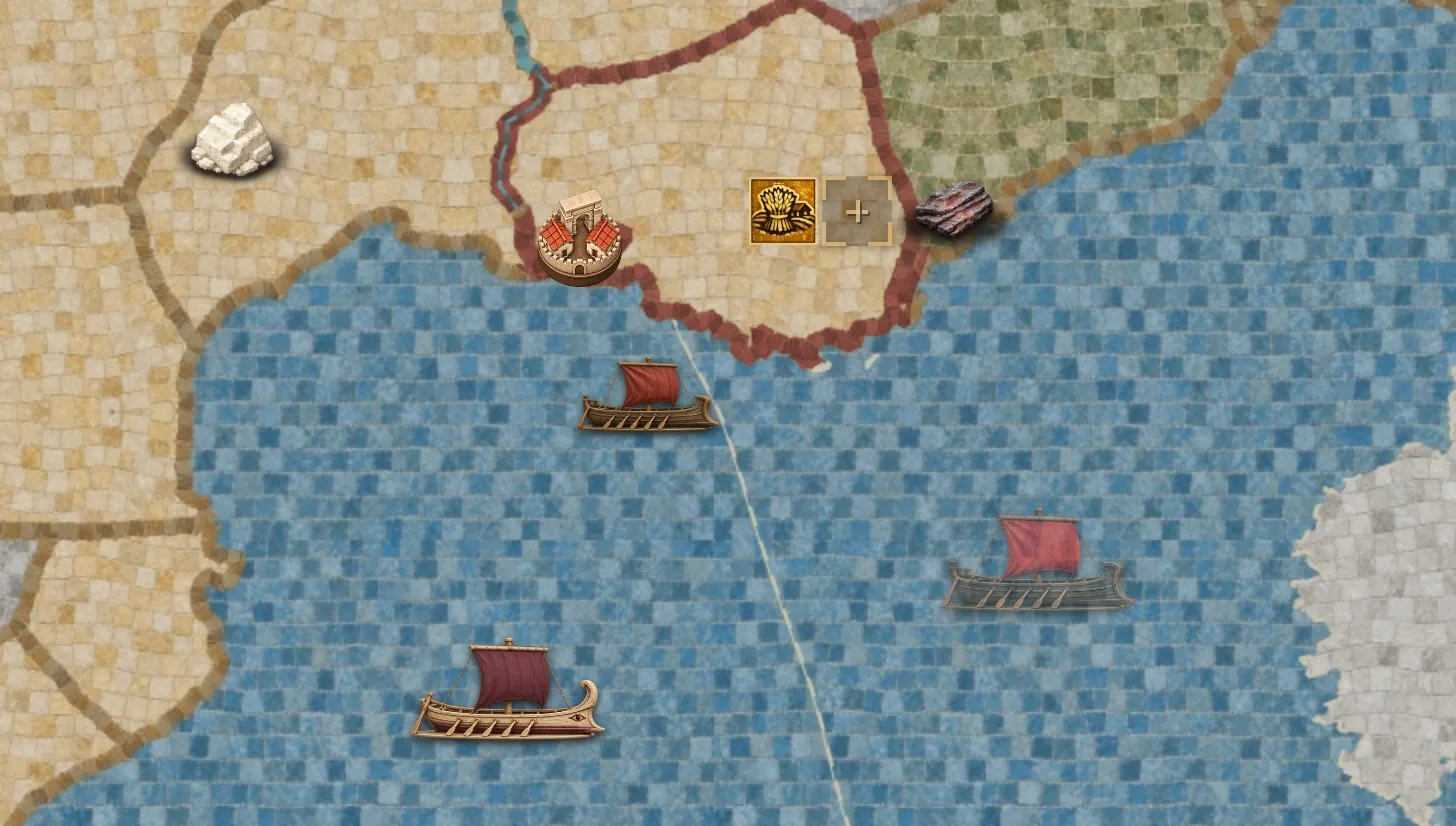
Coastal cities can now build ships and send troops aboard them to launch surprise attacks!
The sea is no longer a barrier!
Naval transport lets you launch a surprise attack on your opponent: travel by sea is faster than on land, and fleets are hidden on the open sea...
Warning: travel on the open sea is fast, but it wears down your ships’ hulls.
A more detailed and historically accurate map of Hispania
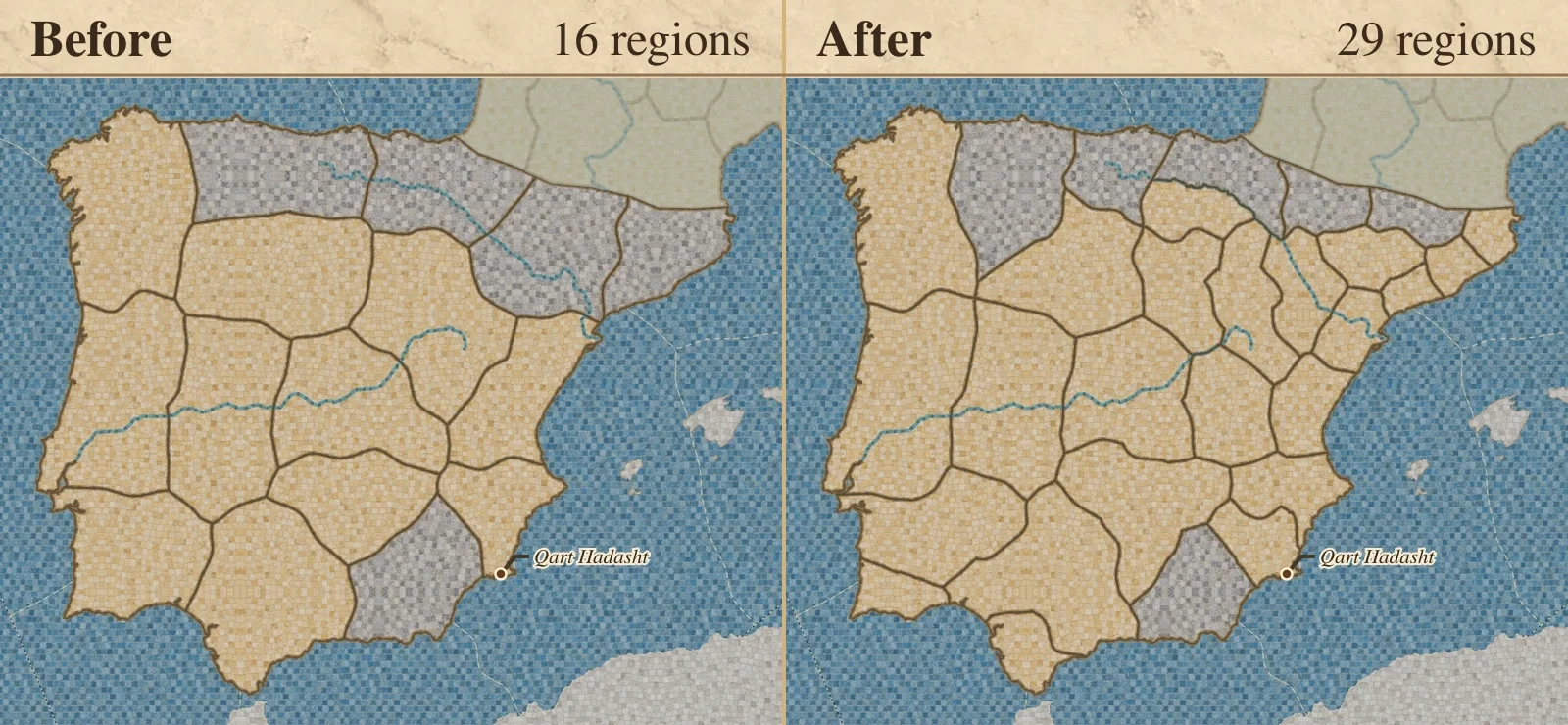
The Carthaginians can now reach Gaul fairly quickly by sea. This shortcut allowed us to redraw Hispania with more land regions for greater geographical and historical accuracy (the regions better reflect the local tribes).
The corvus, Rome’s secret naval innovation
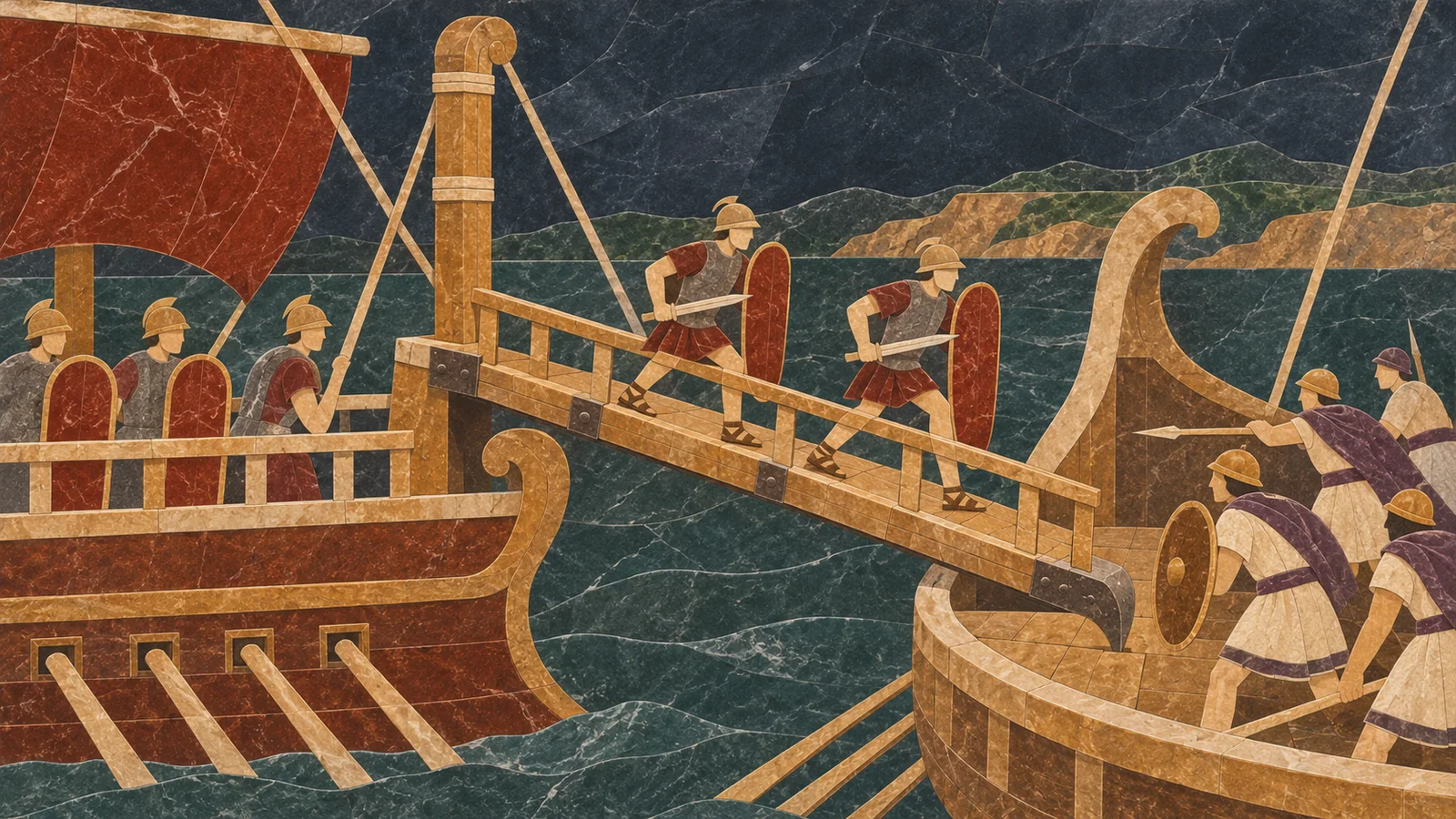
Naval combat is in development. You’ll be able to fire on the enemy crew to inflict heavy losses, or ram a ship to weaken its hull or even sink it. Boarding might be possible too. The Romans are working on a new technology called the corvus...
[…] the Roman crews boarded by means of the ravens […] the battle having become just like a fight on land.
Polybius, Histories, 1.23.6, translated by W. R. Paton.
Greek text and Casaubon’s Latin translation.
Mylae, Sicily
260 BC
The corvus at the Battle of Mylae
In 260 BC, during the First Punic War, the Roman and Carthaginian fleets met off Mylae in Sicily. Polybius wrote that the Carthaginian sailors were puzzled by the sight of a bridge standing upright at the bow of each Roman galley. The bridges, each fitted with a heavy iron spike, caught hold of the enemy decks so the Roman infantry could attack at close quarters as they would on dry land!
Translated from the developer’s French original with AI assistance.